Tuesday, May 02, 2006

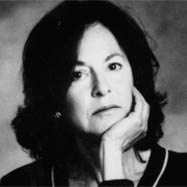
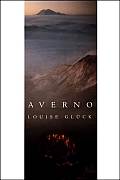
I went to see Louise Gluck at a poetry reading today. She read three poems from her new book Averno. It is so different when a poet reads her own poem out loud compared to you reading her poem. Her poetry is raw and evocative of a world removed from anything we know. It is contained, yet expansive. And readers and listeners alike bend to her command through the music in her words, rather than the words themselves. The whole room went hush...to a death-like silence. The reading was an experience of being lulled...to an awakening.

Exploring gender and sexuality in the characterization of Lucy Snowe.

Gender and sexuality play a prominent role in Villette. Lucy is a single woman struggling for existance in a world that is not very open to women's advancement, socially, intellectually and emotionally.

Once in Villette, Lucy is attracted to two men, at the same time, although, in her typical way, she does not let us in on her inner feelings until the very end. It is clear that she harbors romantic designs on Dr. John although she tries very hard to not let them fruitition. Although she tries to "bury" her dissappointment of unrequited love, she can't keep us from knowing the truth. As for M. Paul, she leaves the readers in the dark until she shocks us with the knowledge that she was fully aware of his intentions (his leaving books and chocolates in her desk), and no doubt encouraged it. Lucy is not cold, as her name purports but burns with female desire. It is a hidden flame, but all-consuming and dangerous, not only to herself, but also the readers who sense its power.

But what I find most intriguing in the novel in terms of conflicts in sexuality is Lucy's relationship to Genevra Fanshawe and the Nun. In class, we had a brief discussion about Lucy's odd friendship with Genevra, who seems to be attracted to her despite her "crusty" exterior. In Villete, like in The Professor, disagreements in a relationship is eroticized. Morever, Genevra perceives Lucy's masculine side, which Charlotte Bronte elucidates. For example, Lucy is addressed as Timon and she also plays the role of a male character in the play held on the day of Madame Beck's Fete. Lucy cross-dresses as a man and there is no doubt eroticization in a woman playing the role "with relish" of a man in love with another woman (who happens to be Genevra). They both seemed to have enjoyed acting in the play. Although Genevra seems to have gained Dr. John's admiration and Lucy seems to have acted out her jealousy, is this really the case? Because Lucy hides so much from us, perhaps we can also assume there must be another layer to the story that she is not telling us explicitly. In characterizing Lucy Snowe, Charlotte Bronte makes the reader aware of issues that were difficult to portray in fiction: such as sexual abuse and domestic violence. It is therefore possible for her to have included conflicts in gender and sexuality into the bargain.

As for the Nun, Lucy seems to have been both fascinated and repelled by her. Is Lucy afraid of her own awakening sense of sexuality? Not only is she attracted to two men (which is different from other novels from the period that insist on a woman being attracted to only one man at a time), but perhaps also to women? Even if there is not too much evidence to support the certainty of a lesbian connection in the novel, there is enough to entertain such a possibility.

Monday, May 01, 2006

Below are the lines I have to recite for a class. I chose these lines because they represent human understanding of God's covenant, and the relationship between desire, love, and worship.

Paradise Lost, Book 9 (l.235-250)

Yet not so strictly hath our Lord imposed
Labour, as to debar us when we need
Refreshment, whether food or talk between,
Food of the mind, or this sweet intercourse
Of looks, and smiles, for smiles from Reason flow,
To brute deni'd, and are of Love the food
Love, not the lowest end of human life.
For not to irksome toil, but to delight
He made us, and delight to reason joyn'd.
These paths and bow'rs doubt not but our joynt hands
Will keep from wilderness with ease, as wide
As we need walk, till younger hands ere long
Assist us. And if much converse perhaps
Thee satiate, to short absence I could yield.
For solitude sometimes is best society
And short retirement urges sweet return.

--John Milton